Stopping
Brakes
Wheels off, pads and rotors inspected, worn parts shown to you before anything is replaced.
Chapter 01
What a worn brake sounds and feels like
A squeal that comes and goes is usually the wear indicator doing its job, warning before the pad is actually gone. Grinding is past that point, metal on metal against the rotor. A pedal that pulses under your foot points to a warped rotor, and a pedal that feels soft or sinks toward the floor points to the fluid or the hydraulic side of the system rather than the pads at all.
Each of those is a different job even though they all show up as a brake complaint, which is why Juan looks at the whole corner of the car rather than guessing from the symptom alone.
Golden-hour light reflecting across a car's windshield and side glass at JBR Motors
How the inspection works
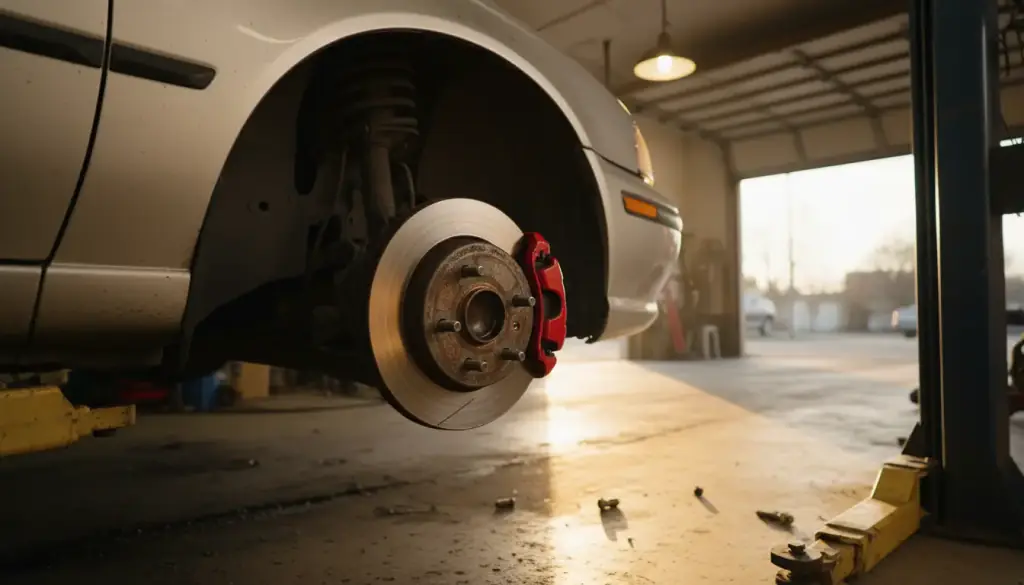
The wheels come off so the pads, rotors, calipers and brake hoses can actually be seen, not just felt through the pedal. Juan measures what is left and shows you the worn parts before anything gets replaced, front or rear, whichever the car needs.
That inspect-and-show approach is the same one Robert Elder described when he wrote that JBR Motors is "upfront, honest, and stands behind their work." His friend went in for exactly this, new front brakes alongside tires and a safety check, after putting a little over 20,000 miles on a car bought from JBR two years earlier.
Chapter 03
Bedding in and when to come back
New pads need a short bedding-in period: a few easy stops rather than hard braking right away, so the pad and rotor seat against each other evenly. After that, listen for the same squeal or grinding that brought you in the first time, because it will come back eventually, just later.
Fall and winter on Yakima and Union Gap roads are when most people finally book the check they have been putting off, which is exactly when Robert Elder's friend brought her car in. Cold weather does not wear brakes faster on its own, but it is a good reminder to have them looked at before the roads get worse.
Robert Elder's friend had her front brakes replaced along with new tires and a safety check heading into fall and winter, and the bill came in at about half what she expected. Call (509) 575-1719 before the roads turn.
What each sound means
Four warnings, four different jobs.
Brakes rarely fail all at once. These are the signs Juan listens for before the wheels even come off.
- Squeal
- The wear indicator touching the rotor
- Grinding
- Pad is gone, metal on metal
- Pulsing pedal
- A warped rotor
- Soft pedal
- A fluid or hydraulic issue, not the pads
- Call
- Describe the sound to Juan at (509) 575-1719. Worth pairing with new tires if those are due around the same time.